ハワイ現地発!最新生活情報&おすすめ観光情報サイト

ハワイ現地発!最新生活情報&おすすめ観光情報サイト


Former Governor George R. Ariyoshi, who made history as the first Asian American governor of any U.S. state, passed away in April 2026.
Throughout his life, Governor Ariyoshi remained focused on one guiding principle: the next generation.
While addressing the challenges of his own time, he always looked ahead and acted for the benefit of others and for society. That commitment never changed—not only as a public servant, but also as a person.
This special feature is not simply a tribute reflecting on Governor Ariyoshi’s life and achievements. Instead, it explores what he valued most and the legacy he hoped to leave for the future.
Looking back on his words today, we find timeless messages that continue to inspire us.

Former Hawaiʻi Governor George Ariyoshi
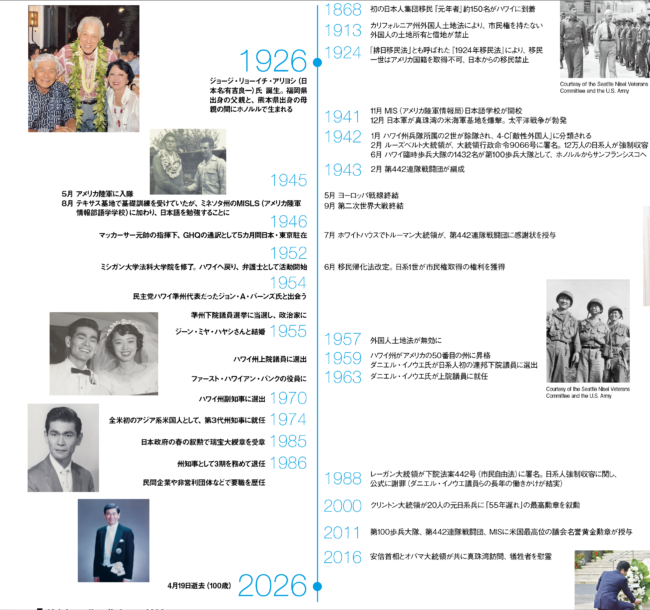
Born in Honolulu in 1926, George Ariyoshi was a second-generation Japanese American (Nisei). He graduated from McKinley High School in 1944 and, after attending the Military Intelligence Service Language School, was stationed in Tokyo as an interpreter for the General Headquarters (GHQ) of the Allied Occupation. After returning home, he earned a bachelor’s degree from Michigan State University and completed his Juris Doctor at the University of Michigan Law School in 1952. He then practiced as an attorney.
In 1954, he was elected to the Territorial House of Representatives, launching his political career. In 1974, he became the first Japanese American, and the first Asian American, to be elected governor of a U.S. state. He served three terms as the third governor of the State of Hawaiʻi, until 1986. After leaving office, he held senior positions in private companies and nonprofit organizations.
In the spring of 1985, he was awarded the Order of the Sacred Treasure, Grand Cordon, by the Japanese government. He passed away on April 19, 2026, at the age of 100.

This timeline follows Governor Ariyoshi’s life alongside the history of modern Hawaii.
The challenges he faced during each stage of his life became the foundation of the values and leadership that would later define his public service.
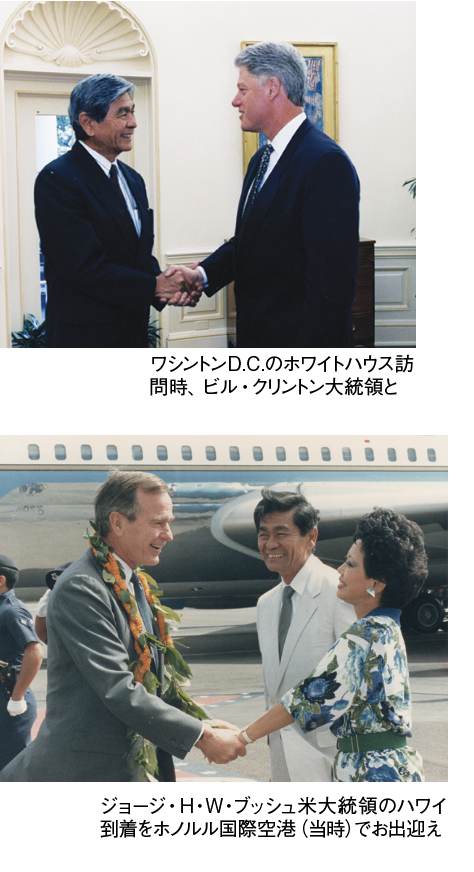
Our editorial team interviewed Governor Ariyoshi twice, in 2019 and 2020.
He spoke about his experiences in Japan immediately after World War II, his return to Hawaii, why he became a lawyer, what led him into public service, and how he lived by his lifelong belief in fairness.
His vision was always focused on Hawaii 50 years into the future. Even in his nineties, Governor Ariyoshi continued to speak about our responsibility to the future.
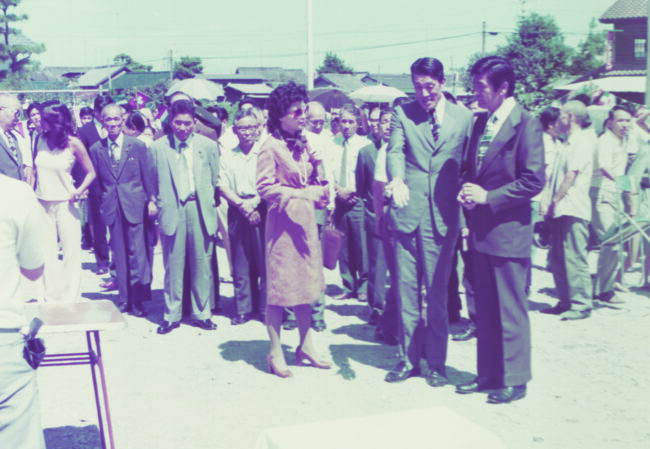
In 1946, shortly after the end of World War II, Governor Ariyoshi was stationed in Tokyo as an interpreter for GHQ (General Headquarters).
One of the first people he met was a seven-year-old boy shining shoes. Seeing that the boy was hungry, Governor Ariyoshi gave him some bread and jam. The boy thanked him politely, but did not eat it right away. Curious, Governor Ariyoshi asked why.
The boy replied,
“I’m taking it home to share with my younger sister.”
Governor Ariyoshi recalled,
“I was deeply moved by that boy’s kindness. It made me proud to be a Japanese American of Japanese ancestry.”
At the same time, he said,
“I became convinced that Japan would recover.”
The compassion shown by a young boy who wanted to share a single piece of bread remained with Governor Ariyoshi throughout his life.
As he had believed, Japan went on to achieve a remarkable recovery and development that amazed the world.
Wanting to help people in need, Governor Ariyoshi chose to become a lawyer.
Through his legal work, he saw firsthand how a small number of powerful business interests held great influence over Hawaii’s economy and politics at that time.
During this period, he met John A. Burns, then Hawaii’s Delegate to the U.S. House of Representatives. Burns strongly encouraged him, saying that he should run for public office for the future of Hawaii.
After entering politics, Governor Ariyoshi remained committed to one guiding principle: fairness.
He worked to build a society where everyone would have equal opportunity, regardless of race or occupation. His efforts included improving working conditions for plantation workers and advancing many institutional reforms.
Later, when he was invited to serve as a bank executive, he accepted because he believed,
“To change society, we must change not only politics, but also the economy.”
By working in both government and business, he sought to build a fairer society.
In 1974, Governor Burns left him with these words:
“If you don’t do it, who will?”
At that time, Governor Ariyoshi was serving as lieutenant governor. He made his decision.
He wanted to show the next generation that Japanese Americans also had the opportunity to lead.
In this way, he became the first Asian American governor in the history of the United States.
When Governor Ariyoshi took office, his vision extended 50 years into Hawaii’s future.
At a time when Hawaii’s population was continuing to grow, he brought together more than 200 people—from students to experts—from every island to discuss the future of Hawaii.
The result was the State Plan, a long-term strategy covering a wide range of areas, including culture, the economy, tourism, education, and the environment.
The plan addressed twelve major areas, including water resources, land use, energy, and workforce development. It was one of the most forward-looking long-term planning efforts in the United States.
Tourism, Hawaii’s leading industry, was also an important part of those discussions.
As the conversations continued, Governor Ariyoshi listened carefully to concerns about Hawaii’s future capacity.
“Simply increasing the number of visitors is not the answer. We must also protect the quality of life for our residents.”
While continuing to support Hawaii’s tourism industry, he also worked to develop new industries so that the state’s future would not depend on a single economic sector.
During his years as governor, Governor Ariyoshi made energy policy a priority before many other states did.
Working closely with the U.S. Department of Energy, he explored Hawaii’s potential for renewable energy.
One example was generating electricity by using bagasse—the fiber remaining after sugarcane is crushed—as fuel. On the Island of Hawaii, this eventually supplied about one-third of the island’s electricity.
He also recognized, at an early stage, the potential of Ocean Thermal Energy Conversion (OTEC), which generates electricity by using the temperature difference between cold deep ocean water and warm surface water.
As part of this effort, he proposed using nutrient-rich deep ocean water for aquaculture, including raising abalone, oysters, and lobsters.
These initiatives later contributed to the development of Natural Energy Laboratory of Hawaii Authority (NELHA), which has since grown into an internationally recognized center for ocean science, technology, and marine-related industries.
Governor Ariyoshi was also deeply committed to developing Hawaii’s aerospace industry.
The Island of Hawaii, with some of the world’s best conditions for astronomical observation, has long been recognized by NASA as an ideal location for space-related research and development.
For nearly twenty years, Governor Ariyoshi worked to establish a new aerospace industry in Hawaii. He served as Chairman of the Pacific International Space Center for Exploration Systems (PISCES) and as the U.S. Advisor to the Japan-U.S. Science, Technology and Space Applications Program (JUSTSAP).
He believed that the space industry was more than technology alone.
“The space industry is an industry that develops knowledge, research, technology, and people.”
He believed it could create new jobs, inspire young people, and help build Hawaii’s future.
“I hope Hawaii will take the lead in this research.”
Those words reflected his great hopes for Hawaii’s future.
<A Family Photograph That Traveled into Space>
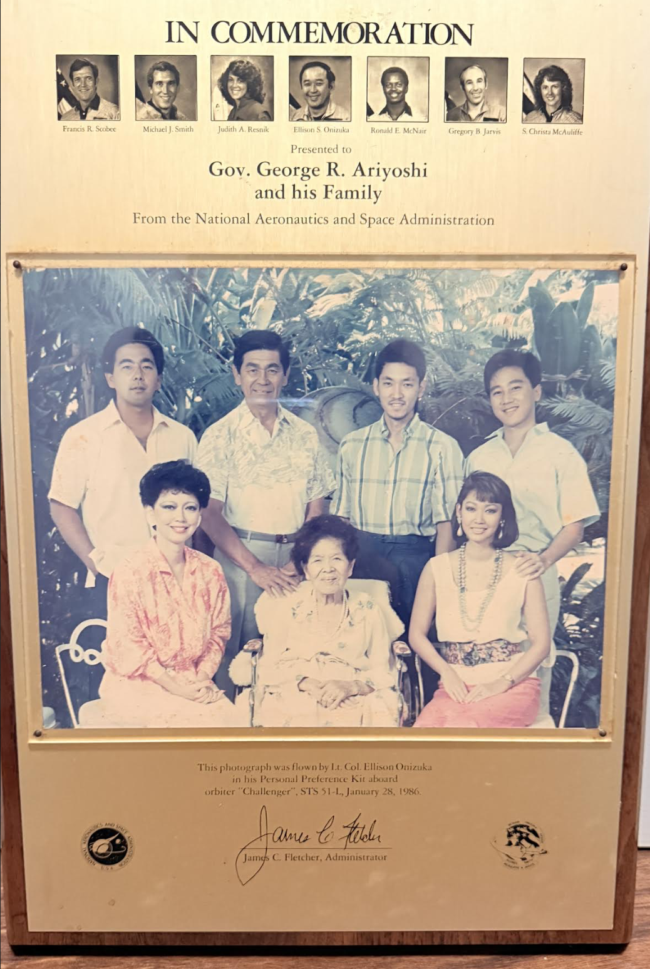
In 1986, Hawaii-born astronaut Ellison Onizuka carried a photograph of Governor Ariyoshi and his family aboard the Space Shuttle Challenger as a tribute to the Governor’s commitment to space development.
Tragically, Challenger broke apart shortly after launch. Two months later, the photograph was miraculously recovered from the ocean floor.
In March 2018, a copy of that same photograph was carried into space once again by Russian cosmonaut Oleg Artemyev.
After completing a mission of nearly 200 days aboard the International Space Station, he returned safely to Earth.
More than thirty years after the original mission, the photograph once again traveled into space—a lasting symbol that Governor Ariyoshi’s vision for the future continues to live on.
At the end of our interview, Governor Ariyoshi spoke about what he believed would become the world’s greatest priority.
“The most important issue in the future will be international relationships.”
He continued:
“If Japan and the United States work hand in hand, their partnership will not be limited to just the two countries. It can have a positive influence throughout Asia and around the world.”
Governor Ariyoshi had great hopes that Japan would continue to play an important role in Asia and in the international community.
He also hoped that Hawaii would continue to serve as a bridge between Japan and the United States, supporting that partnership for future generations.
That was the future he envisioned for Hawaii.


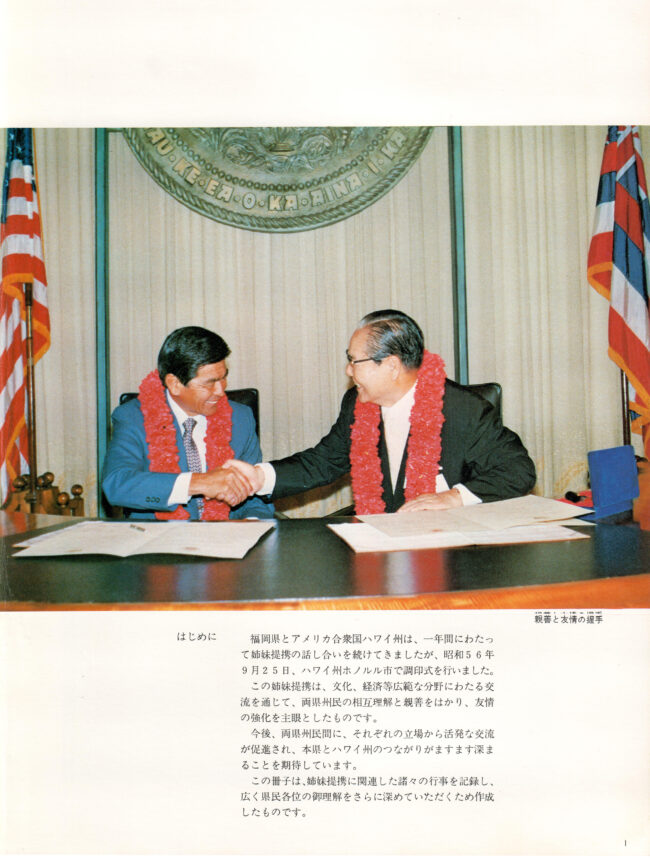

Governor George Ariyoshi leaves behind a legacy that will forever shape Hawaiʻi. As our state’s longest-serving governor and the first Asian American elected governor in the nation, he demonstrated what steady, principled leadership looks like. Throughout his years in office, he guided Hawaiʻi through periods of economic uncertainty, strengthened the state’s financial foundation, expanded relationships throughout the Asia-Pacific region and helped establish Hawaiʻi as a leader in international cooperation.
I was fortunate to know Governor Ariyoshi personally and to witness the quiet dignity he carried throughout his life. He never sought recognition for himself. Instead, he focused on building strong institutions, making thoughtful decisions and leaving Hawaiʻi better than he found it. His example reminds all of us that true leadership is measured not by headlines, but by integrity, consistency and service.
What I hope future generations remember most is that Governor Ariyoshi believed public office is a responsibility and a privilege. He demonstrated that lasting progress comes from listening carefully, respecting others and governing with fiscal responsibility, humility and respect for every community. Those values are just as important today as they were during his years in office.
As Hawaiʻi continues to navigate new opportunities and challenges, Governor Ariyoshi’s example remains a guide. His life reminds us that compassion and good governance go hand in hand, and that leadership grounded in service has the power to strengthen communities for generations to come.
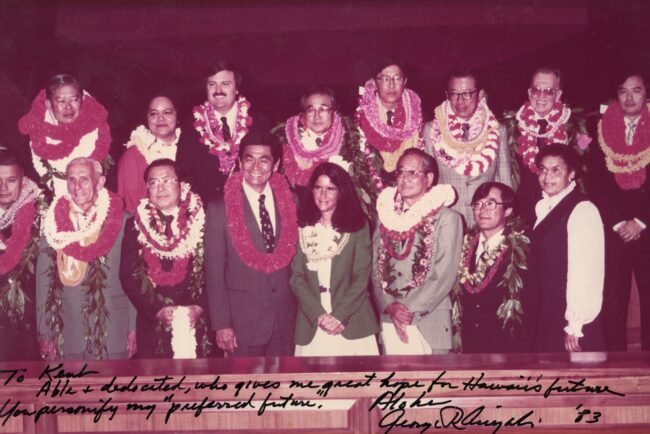
I served in the Department of Planning and Economic Development from 1979 to 1986, first as a Coordinator in the Office of the Director, then as Deputy Director, and finally as Director of the Department and a member of Governor Ariyoshi’s cabinet.
I remember Governor Ariyoshi as a quiet, thoughtful, gentle person who was good at listening and had a quick sense of humor. People trusted him. He was a true public servant, focused on serving the community today, while taking into account future generations. He really cared about making life better for those who would come after us—our children’s children. He focused on what he called “our preferred future.” That preferred future was described in the Hawaii State Plan, which became a state law under his leadership. The State Plan was implemented through Functional Plans that were shared with the community to get input. People were not only invited to testify at the legislature on the law, they were also invited to testify on the way the law was implemented after it was adopted. This democratized the work of the administration.
Governor Ariyoshi was most effective in small groups, like coffee hours, because that was when people came to understand his honesty and authenticity. He was proud to be a Democrat, but he supported good ideas wherever they came from, and gave credit where credit was due. He was willing to take an unpopular position on an issue if he believed it was best for Hawaii. During election campaigns, he reminded us campaign workers to treat our opponents respectfully, because when we won, we needed to be able to work with everyone, including political opponents.
Governor Ariyoshi purposely hired young people whom he hoped would make a career serving the community. I was only 34 when he nominated me to serve in his cabinet as Director of Planning and Economic Development. I became the second youngest department director in the history of the State. While Governor Ariyoshi cared about details and stayed late at the office consuming reports about operations and issues affecting the State, he gave us cabinet members a lot of freedom to lead our departments as we thought best. He was a fiscal conservative, making sure that we stayed within our budgets and did not waste taxpayer’s money, but he was willing to invest in promising new programs and services.
I traveled with the Ariyoshi’s to a Western Governors Conference and was proud of the way they represented our state. I was also touched by the obvious affection and respect that Governor and Mrs. Ariyoshi had for each other, holding hands and quietly conferring when appropriate.
My term in office concluded when Governor Ariyoshi’s term ended in 1986, but my wife Elizabeth and I enjoyed seeing the Ariyoshi’s many times over the next forty years. I know that Governor Ariyoshi never stopped thinking and talking about new ideas and opportunities that could benefit the people of Hawaii. Public citizen or private citizen, he never stopped caring about our future.
What has stayed with me all these years was his conviction that Hawaii does not have to be tossed around by the whims of fate, subject to the dictates of outside forces. We can work together to identify and seize opportunities that are good for our people, our economy, and our natural environment. It is possible to make our preferred future a reality.

1974年、全米史上初のアジア系アメリカ人知事に就任されたアリヨシ元知事は、現在とは異なる時代背景の中で、誰一人通ったことのない道を歩まれました。さまざまなご苦労やご葛藤があったことと思います。そうした状況下でも信念を貫かれ、3期にわたってハワイ州知事としての重責を担われました。
中でも私が深く敬意を抱いておりますのは、当時厳しい状況にあったハワイ州財政の立て直しに尽力され、見事に財政健全化を実現されたというご実績です。このことは生前、アリヨシ元知事ご自身からも直接お話を伺いました。財政再建という困難な課題に、真正面からに取り組まれたお人柄に感銘を受けました。困難な時代にハワイのかじ取りを担い、堅実かつ着実な歩みでハワイの未来を切り開かれたそのお姿に、リーダーとしてあるべき姿を見た思いがいたします。
そうした輝かしいご功績とともに、私にはもう一つ忘れられない思い出があります。ご夫妻が福岡県を訪問された際、アリヨシ元知事は終始、おだやかな満面の笑みを浮かべていらっしゃいました。寿司やがお好きで、そんな話題で盛り上がったことが、今も鮮やかに思い出されます。
アリヨシ元知事に結んでいただいたハワイ州と福岡県との「絆」を、さらに確かな、そして強固なものにしていくため、私も力を尽くしてまいります。
To me, former Governor George Ariyoshi was an important bridge connecting the Urasenke tradition, Hawaii, Japan, and the United States.
Over many years, Governor Ariyoshi developed close personal and professional friendships with the former Urasenke Grand Master, Hōunsai, and the current Grand Master, Zabōsai. He gave generous support to international cultural exchange and peace-building through the Japanese tea ceremony, including tea gatherings in Hawaii, Washington, D.C., and at the United Nations Headquarters in New York.
Thanks to his encouragement and support, the activities of Urasenke expanded not only throughout Hawaii, but across North America and beyond. I remain deeply grateful for everything he did.
By the time I came to know Governor Ariyoshi, he was already advanced in age and occasionally needed assistance. Even then, he never forgot to express his appreciation to those around him. His gentle words of “Thank you” left a lasting impression on me.
In every conversation, I could sense that he was always thinking about the future and asking what should be done today for the next generation. His foresight and wisdom strengthened my respect for him as an exceptional leader.
In his later years, I often received updates about him through his family. Knowing that he enjoyed drinking matcha, I would bring him high-quality tea whenever I had the opportunity. It was my own small way of expressing gratitude.
I was comforted to learn that he spent his final days peacefully, surrounded by his family. His legacy continues to inspire deep respect and gratitude.
We hope to carry forward the values that Governor Ariyoshi demonstrated throughout his life: respect for culture, appreciation for the bonds between people, and a commitment to leaving a better society for future generations.
I like to imagine that he is now in heaven, sharing a bowl of matcha with Grand Master Hōunsai, enjoying a warm conversation together.
***********

“My Japanese father taught me the expression okagesama de. Rather than trying to accomplish something alone, people can achieve far greater things by working together. When that happens, it is important not to say, ‘I did it,’ but instead to say, ‘Okagesama de’—it was possible because of the support of others.”
________________
Born a second-generation Japanese American, serving as a GHQ interpreter in postwar Japan, and later becoming the first Asian American governor in the history of the United States, Governor Ariyoshi lived through a remarkable period of history.
Having witnessed people who endured times of extraordinary change, he believed that studying history was not simply about looking back at the past, but about carrying its lessons forward into the future.
“The people who rebuilt Japan after the nation had been devastated by war, and the Japanese Americans in Hawaii and across the United States who lived through the hardships and challenges of that era, are becoming fewer with each passing year. That is why I hope their stories will never be forgotten.”

Governor Ariyoshi’s wife, Jean Ariyoshi, who stood beside him throughout his life, shared these words:
“Governor Ariyoshi devoted most of his life to building a better future for the State of Hawaii and its people. He truly loved all of you.”
The philosophy that guided every action of Governor Ariyoshi’s life was simple:
Live not for yourself, but for the next generation.
A spirit of sharing.
A commitment to fairness.
The vision to look toward the future.
And a heart that says, “Okagesama de“—with gratitude for the support of others.
These are the values Governor Ariyoshi left to us.
They are not only the legacy of a governor, but the example of how one person chose to live.
*This article is an English translation of a piece originally published in the August 2026 issue.